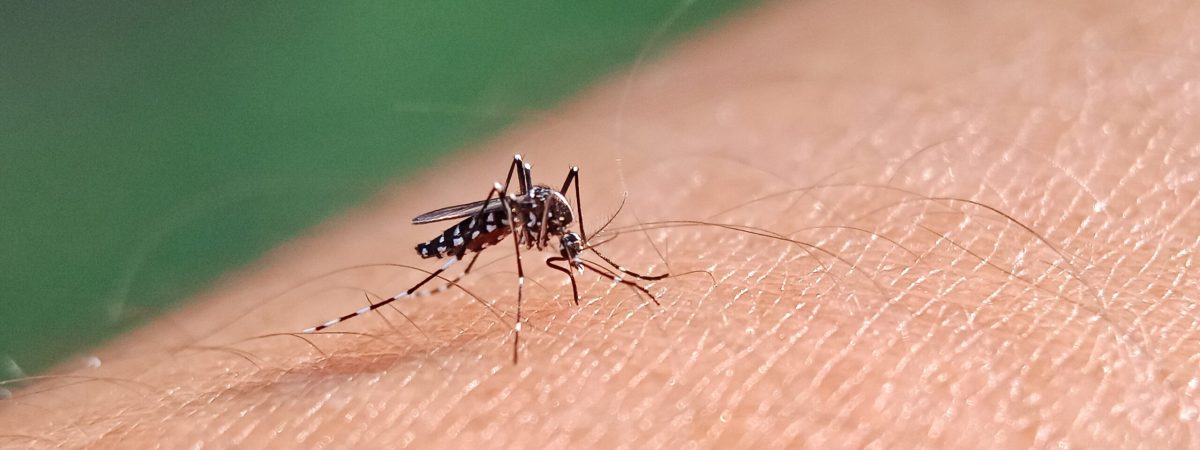
Image description: A close-up image shows a mosquito feeding on human skin.
Mosquitoes in Hamilton County have tested positive for West Nile virus, and Hamilton County Public Health is encouraging residents to take active precautions to reduce their risk of disease.
As part of a standard operating procedure, Hamilton County Public Health traps mosquitoes throughout the county and sends them to the Ohio Department of Health for testing. This provides HCPH with a vital tool for assessing the region’s threat of West Nile virus.
On Aug. 26, HCPH learned that mosquitoes our agency had trapped in Green Township on July 30 tested positive for carrying West Nile virus. This was the first time in 2026 that West Nile virus was detected in mosquitoes within HCPH’s jurisdiction (all of Hamilton County, Ohio, except for Cincinnati, Springdale and Norwood).
West Nile virus was found in mosquitoes only. At this time, there is no confirmed or probable human infection.
Review HCPH’s fact sheets to learn about mosquito prevention at home and mosquito-borne disease risk reduction while traveling.
About West Nile virus in Hamilton County
West Nile virus is a disease that affects the central nervous system and is commonly spread to humans through the bite of an infected mosquito, particularly during mosquito season.
People with mild cases of West Nile virus infection typically experience flu-like symptoms such as fever, headaches, body aches, joint pain, vomiting, diarrhea or rash. Most people with mild illness recover completely, but fatigue and weakness can last for weeks or months.
People who experience severe symptoms should see a doctor as soon as possible to avoid serious illness like meningitis, encephalitis and acute flaccid myelitis.
Learn more about West Nile virus from the Ohio Department of Health.
How property owners can reduce West Nile virus in Hamilton County
When West Nile virus is detected in Hamilton County, Hamilton County Public Health’s environmental health specialists surveil the area and treat standing bodies of water with larvicide to prevent more mosquitoes from breeding. Specialists also speak with residents about mosquito concerns and distribute educational materials.
HCPH encourages Hamilton County property owners to consider the “Drain, dunk, protect” method. This phrase can help property owners reduce the number of mosquitoes hanging around their homes and land, lowering the risk of West Nile virus.
- Drain: Eliminate standing water that collects in pools, birdbaths, toys and playsets, open containers, wheelbarrows, old tires, gutters and other vessels.
- Dunk: Buy larvicide or “dunks” to kill mosquito larvae in standing water that cannot be drained.
- Protect: Avoid being outdoors during peak mosquito times (dusk and dawn), especially in humid or wooded spaces. Wear light-colored, loose-fitting clothing, and apply mosquito repellants to your skin according to product instructions.
For more tips, download HCPH’s fact sheet about mosquito bite prevention and mosquito control at home.
If you notice high mosquito activity or standing water in your neighborhood, such as on an abandoned property or in a pool, you can submit a complaint, and HCPH’s environmental health team will investigate. Submit a public health complaint online.
How Hamilton County travelers can reduce risk of West Nile virus
Hamilton County residents with travel plans also can take precautions to avoid mosquitoes and reduce their risk of West Nile virus abroad.
Travelers should review international travel warnings from local and international agencies. For example, the CDC’s Travelers’ Health webpage features important health notices and provides geographically relevant information on mosquito-borne diseases and other health concerns.
Hamilton County Public Health also encourages travelers to speak with their healthcare provider and ask about immunizations that are recommended or required for international travel.
When heading to an area with an elevated risk for mosquito-borne diseases, travelers may want to consider bringing EPA-registered mosquito repellents, protective clothing and mosquito netting.
For more travel tips, download HCPH’s fact sheet about preventing mosquito-borne disease while traveling.