
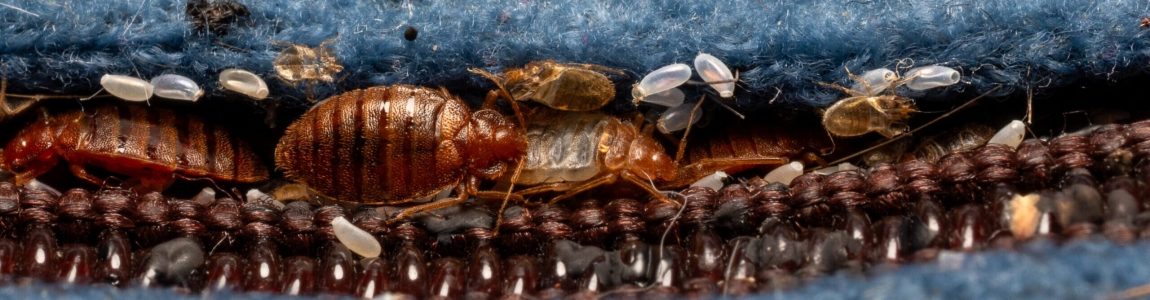
Cover image description: Close-up photo of reddish-brown bedbugs, eggs and exoskeletons along the seam of a blue fabric, indicating an active infestation.
Few public health nuisances inspire a high level of dread like bedbugs do. Although bedbugs are not known to transmit infectious diseases, their bites typically cause itching and irritation, while infestations can bring on stress, stigma, insomnia and significant treatment costs.
And with pest-control companies citing areas of Hamilton County among the nation’s top locations for bedbug activity, local residents and visitors understandably don’t want anything to do with these insects.
However, spotting bedbugs early and taking immediate action can help reduce the problems they cause, making infestations easier to manage. Download Hamilton County’s fact sheet about bedbugs and read below for tips about how to look for them and reduce their impact at home and while traveling.
Look for bedbugs and signs of infestation
Bedbugs typically are found in places where people sleep. Although bedbugs can travel up to 100 feet in a single night, bedbugs typically stay close to beds and other soft, nap-worthy furnishings. They hide in small cracks and crevices during the day, emerging at night to feed on sleeping bodies.
If you suspect an infestation at home or while traveling, carefully inspect sleeping areas and surrounding furniture for bedbugs and other signs of their activity.
- Use a flashlight or magnifying glass to inspect areas where people sleep or spend extended periods of time, including homes, apartments, hotels, shelters, dormitories, cruise ships, buses and trains.
- Check common hiding places around beds and sleeping areas, such as mattress seams, box springs, bed frames, headboards, nightstands and dressers.
- Search for exoskeletons that bedbugs leave behind as they grow and molt.
- Monitor sheets, mattresses and nearby furniture for small rust-colored blood spots or black feces dots.
- Be aware of a sweet, musty odor, which may be present in areas with larger infestations.
- Look for itchy bite marks on your face, neck, arms or hands after sleeping. Keep in mind that bite reactions may take up to 14 days to appear, and some people may not react at all.
Reduce the risk of bedbug bites and infestations at home and while traveling
Bedbugs can affect anyone, in any type of living environment — bedbugs are not a sign of poor hygiene or an unclean home. While preventing bedbug infestations can be challenging, taking proactive steps can make an infestation easier to detect and control.
- Contact a licensed pest control professional if you suspect a bedbug infestation.
- Pull your bed a few inches from the wall.
- Reduce clutter to eliminate potential hiding places.
- Inspect clothing, luggage and used or newly purchased furniture before bringing items into your home.
- Avoid putting suitcases and clothing on soft surfaces or the floor while traveling.
- After traveling, carefully inspect and clean luggage on a hard surface and wash and dry clothing on high heat.
- Regularly launder all bedding, clothing and other washable items in hot water (at least 120°F) and dry on high heat for at least 30 minutes.
- Vacuum regularly, paying close attention to sleeping areas, furniture and cracks and crevices. Dispose of vacuum contents in a sealed bag in an outdoor trash bin.
- Use zippered mattress and box spring covers and keep beds slightly away from walls when possible.
- Steam-clean mattresses, upholstered furniture and other areas where bedbugs may hide.
People in certain occupations such as social workers and home healthcare workers may require additional measures to reduce the risk of bedbug transmission. Download our bedbug fact sheet to read additional guidance tailored to these professions and work settings.
Have a bedbug complaint? Let HCPH’s environmental health team know by filling out this online complaint form.