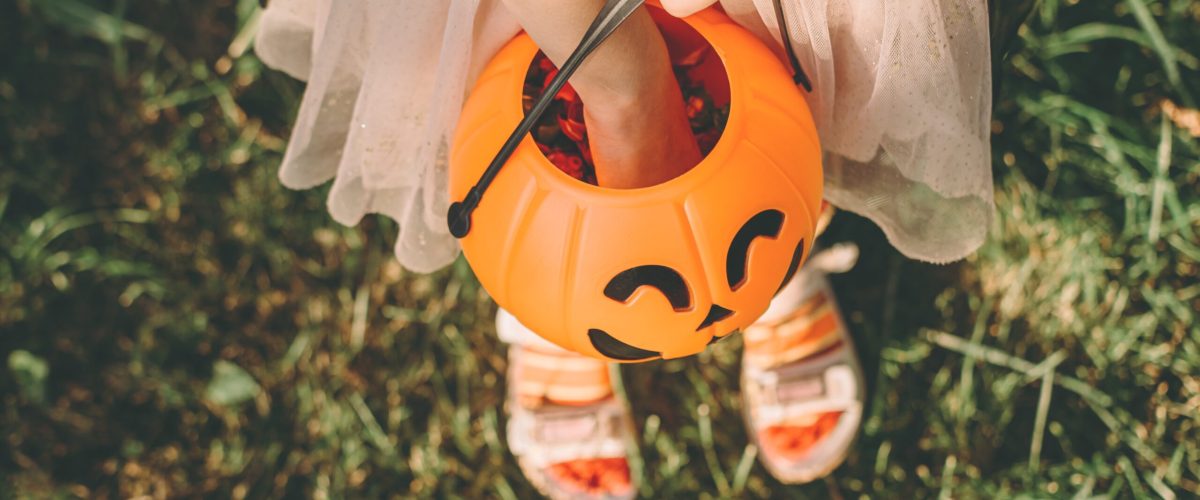
Image description: A trick-or-treater reaching into an orange-and-black jack-o’-lantern candy bucket.
During Halloween outings in Hamilton County, Ohio, ghouls and goblins fill their bags with all kinds of goodies. And by practicing good health and safety habits around Halloween treats, everyone can reduce their risk of foodborne illness and germs once it’s time to sample their loot.
Which Halloween treats should you avoid?
No matter if you’re distributing Halloween treats or receiving them, it’s important to consider safe food handling and presentation. In general, commercially packaged, individually wrapped snacks present less of a risk for foodborne illness than homemade goodies do.
“It might seem like homemade cookies or sliced carrot sticks are good choices for Halloween, but handing out or accepting commercially packaged snacks would actually do a better job of reducing the risk that a child will become ill,” says Jeremy Hessel, director of environmental health at Hamilton County Public Health.
Germs and bacteria can develop during food preparation at home and cause illnesses like Salmonella from unpasteurized apple cider or undercooked eggs in cookie dough as well as E. coli from raw flour or unwashed produce. These and other gastrointestinal illnesses often cause serious symptoms:
- watery diarrhea
nausea
vomiting
abdominal cramps
loss of appetite
dehydration
Download HCPH’s fact sheet about preventing and recognizing foodborne illnesses.
“You also have to read the labels,” Hessel says. “Check the date on the package and make sure the items are in good condition – not something that’s been forgotten in the back of a pantry.”
Which Halloween activities should you reconsider?
Foodborne illnesses aren’t caused only by the Halloween treats you give or get at a door in Hamilton County. Hessel says you might want to think twice about bobbing for apples, noting that the water and apples likely are harboring all kinds of pathogens that cause illness
Likewise, you may want to skip hosting or eating at a Halloween barbecue for the neighborhood this year. Hessel says that with all the Halloween fun happening, it’s too easy for handwashing to be skipped or for foods to sit out for too long at temperatures that harbor bacterial growth.
“Both activities present huge risks for spreading germs and illness,” Hessel says.
Download HCPH’s fact sheet about practicing good food safety at home.
Hessel adds that good basic hygiene can go a long way in reducing Halloween germs.
“One of the easiest ways to slow the spread of germs is to wash your hands before and after trick-or-treating, and use hand sanitizer while you’re passing out treats or mingling with neighbors,” Hessel says. “By doing that, you’re reducing the number of ways germs can spread.”
How can you reduce health risks while enjoying Halloween treats?
Hessel has a few tips that will help reduce the risk of foodborne illnesses as you enjoy Halloween treats.
- Wash your hands thoroughly before distributing or eating Halloween snacks.
- Only distribute or accept foods that are securely wrapped by the manufacturer. Toss homemade or unsealed items.
- Don’t snack on treats while going from house to house. Wait until you get home and have inspected all items.
- Look for holes in the overall packaging or in wrappers for individual items.
- Check package dates and look for signs of decay. Avoid snacks that are past their prime.
- Talk with your doctor if a snack tastes off or makes you or your child ill.
- Download HCPH’s fact sheet about preventing and recognizing foodborne illnesses.
Published on 10/27/2026