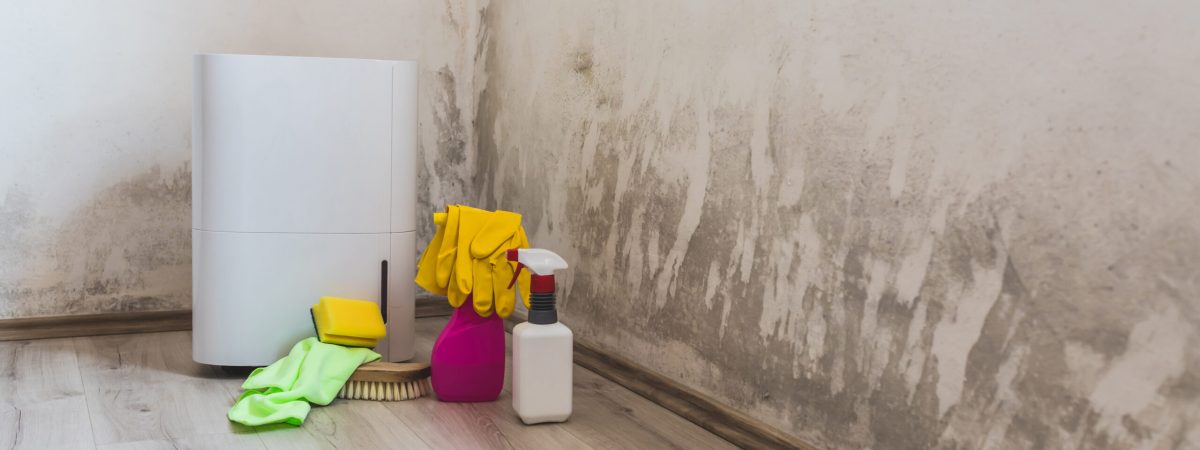
Image description: Cleaning supplies and a dehumidifier used for flood cleanup in a room with damaged walls.
Flooding is the most common natural disaster in the United States. In Hamilton County, Ohio, heavy rains and thunderstorms can quickly lead to flooded roadways and water entering homes and businesses.
Protecting your health and safety during flood cleanup is just as important as preserving your wet belongings. Floodwaters in Hamilton County can create serious hazards, including electrocution, mold growth and sewage contamination. Acting quickly and following safe flood cleanup practices can help prevent injuries and reduce the risk of illness. For more guidance, download Hamilton County Public Health’s fact sheet about cleaning up after a flood.
What should you do during flood cleanup?
Floodwater may contain harmful bacteria, viruses, chemicals and other contaminants. Even water that appears clean can pose health risks, so it’s important to take precautions before beginning the cleanup process.
Keep these tips in mind as you begin your flood cleanup:
- Turn off all power sources before beginning any flood cleanup work.
- Wear rubber boots, gloves and other appropriate protective equipment during flood cleanup.
- Keep children and pets away from areas contaminated by floodwater or sewage.
- Clean and disinfect salvageable items that were exposed to floodwater. Dispose of anything that cannot be safely cleaned.
- Dry your home or business as quickly as possible by opening windows, using fans and running dehumidifiers to help prevent mold growth.
- Never mix chemicals. Do not mix bleach with ammonia or any other chemical.
Consider hiring a professional contractor or mold remediation company if the flood cleanup task or damage is significant.
Is your food safe during flood cleanup?
Flooding doesn’t just damage homes and businesses; it can also affect the safety of your food. Power outages and floodwater contamination can increase the risk of foodborne illness if precautions aren’t taken. Download our fact sheet for tips on keeping food safe during emergencies and clean up.
- Throw away any food that came into contact with floodwater, including refrigerated and frozen foods.
- Discard spoiled or thawed foods, including milk, cheese and bulging or leaking canned goods.
- Toss any food that reaches 40°F or higher. A closed refrigerator will keep food cold for about four hours without power. A full freezer can keep food frozen for about 48 hours. Use a food thermometer to check temperatures.
- Discard items if you’re uncertain about their quality. When in doubt, throw it out!
Should mosquito prevention be part of your flood cleanup?
Once you have a handle on the big flood cleanup tasks, look around outside your property for standing water. Heavy rains and floods can add water to your property in different locations, and if that water becomes stagnant, mosquitoes may be drawn to breed in it.
That raises the risk for mosquitoes to transmit infectious diseases to humans, including West Nile virus.
To help reduce the number of mosquitoes around your property, follow these “Drain, dunk, protect” steps:
- Drain: Eliminate standing water that collects in pools, birdbaths, toys and playsets, open containers, wheelbarrows, old tires, gutters and other vessels – all places where mosquitoes tend to breed.
- Dunk: Buy larvicide or “dunks” to kill mosquito larvae in standing water that cannot be drained.
- Protect: Avoid being outdoors during peak mosquito times (dusk and dawn), especially in humid or wooded spaces. Wear light-colored, loose-fitting clothing, and apply mosquito repellents to your skin according to product instructions.
Want more information? Download our flood cleanup fact sheet, our food safety during emergencies fact sheet and our mosquito-prevention fact sheet.
Published July 22, 2026.
Updated August 12, 2026