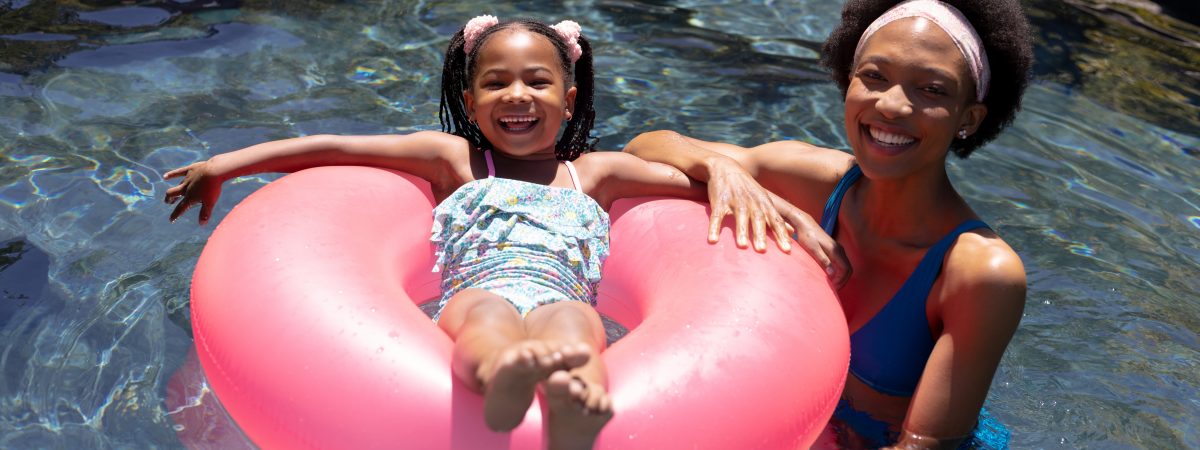
Image description: An adult stands in a pool beside a smiling child who is reclining in a large pink inflatable pool ring.
Summer and water just go together. Whether you’re cooling off in a backyard pool, spending a long afternoon at the lake, getting soaked at a water park or wading into a local river, being in the water is one of the best parts of the season.
It’s easy to focus on the fun, but it’s just as important to keep in mind that recreational waters can come with health and safety risks. Keep reading to learn how you can avoid water-related illness and injuries this summer.
What's lurking in a pool or lake?
While toys, fish and floating tree limbs may be easy to spot, recreational waters can also contain germs that aren’t visible. Lakes, rivers, ponds and even swimming pools can harbor bacteria, parasites and other pathogens that make people sick.
Common germs found in recreational waters include E. coli and Cryptosporidium (“crypto”). These germs can cause diarrhea, stomach cramps, nausea, and vomiting. People often become sick after accidentally swallowing contaminated water while swimming in the pool or in nature.
To reduce your risk of recreational water illnesses, no matter where you are:
- Avoid swallowing water while swimming.
- Monitor children and pets closely, as they may be more likely to ingest water while playing.
- Take frequent bathroom breaks, washing your hands afterward.
- Change diapers away from the water.
- Wash your hands thoroughly after touching recreational water or being outdoors.
- Wash your hands thoroughly after using an indoor or outdoor restroom.
- Avoid participating in water activities if you feel ill – especially if you are experiencing diarrhea – so that you don’t spread germs to others.
Download Hamilton County Public Health’s fact sheets on E. coli and Cryptosporidium for more information about what’s in the pool and in recreational waters.
Prevent drowning and other injuries in the pool or lake
Drowning remains a serious public health concern, particularly for young children. According to the Ohio Department of Health, 45% of child drowning deaths reviewed in Ohio occurred among toddlers ages 1 to 4 years old. Many of those drowning incidents happened in pools, spas, hot tubs and natural water settings such as lakes, rivers and ponds.
To reduce the risk of drowning for all ages:
- Consider each person’s swimming ability before entering the water.
- Ensure that barriers such as fences and locked gates prevent unsupervised access to pools and other waters.
- Provide constant, close supervision whenever children are swimming or playing near water.
- Wear a properly fitted U.S. Coast Guard-approved life jacket when boating or participating in water activities.
- Avoid alcohol use when swimming, boating, or supervising others around water.
- Be aware of medical conditions or medications that may increase the risk of drowning.
Recreational water safety is just one part of staying healthy during the summer months. Many of the same conditions that make swimming and outdoor activities enjoyable—high temperatures, lots of sun, and long hours outside—can also increase the risk of heat-related illness.
As you plan days at the pool, lake or river, think about the bigger picture of summer safety. Stay hydrated, take breaks in the shade, and recognize early signs of heat exhaustion and heat stroke.
Get more information in Hamilton County Public Health’s story about preventing heat illness.
Publish date: 6/25/2026