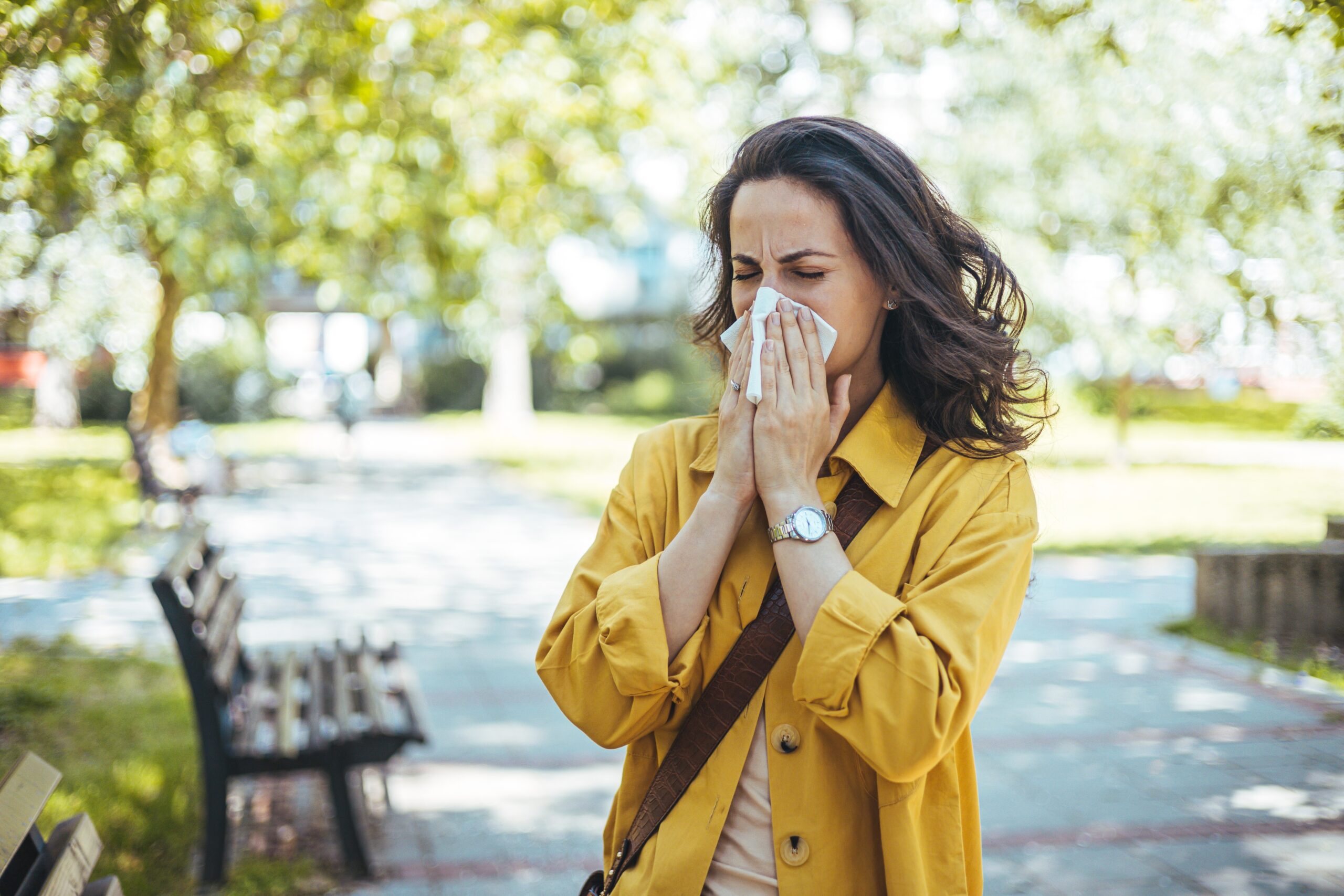
Spring allergy season has begun, which means sneezing and wheezing are in store for many people in Hamilton County, Ohio.
“If you can see some flowers on the trees, then there’s pollen in the air, and other allergy triggers aren’t far behind,” says Dr. Stephen Feagins, medical director for Hamilton County Public Health.
Pollen, grass, weeds and mold spores are common triggers for seasonal allergies (also known as allergic rhinitis), but your body also might react to insect bites, dust mites and even pet dander this spring.
“Once people, plants and animals emerge outdoors for spring, allergy season is happening,” Feagins says. “Spring rains and winds also blow everything around, which makes it easier for people to inhale or absorb allergens.”
How do you know if you have spring allergies?
How do you know if you’re experiencing spring allergies rather than a common cold or another illness? Feagins says that it can be hard to tell, as many of the symptoms that come with allergy season overlap with other illnesses.
Spring allergy symptoms often include:
• runny nose
• congestion
• sneezing
• coughing
• watery eyes
Doctors can learn more by performing skin or blood tests, and many seasonal allergies can be treated with over-the-counter or prescription medications and treatments.
Can you avoid dealing with spring allergies?
Unfortunately, spring allergy season makes it easy to catch or spread germs when in public. Here’s how you can minimize risks, discomfort and illness:
• Note the daily pollen and mold counts as you check weather forecasts. Consider reducing outdoor activity (for pets, too!) when those counts are high in the morning and evening.
• Keep the doors and windows to your home and car shut to block allergy triggers from entering.
• Wash your hands frequently, especially after you’ve been outdoors.
• Cover your coughs and sneezes.
• Change your clothes after being outside. Shower if you’ve spent significant time outdoors.
• If you must do lawncare or other work during peak allergy hours, wear sunglasses/goggles or a mask to minimize watery eyes or allergen inhalation.